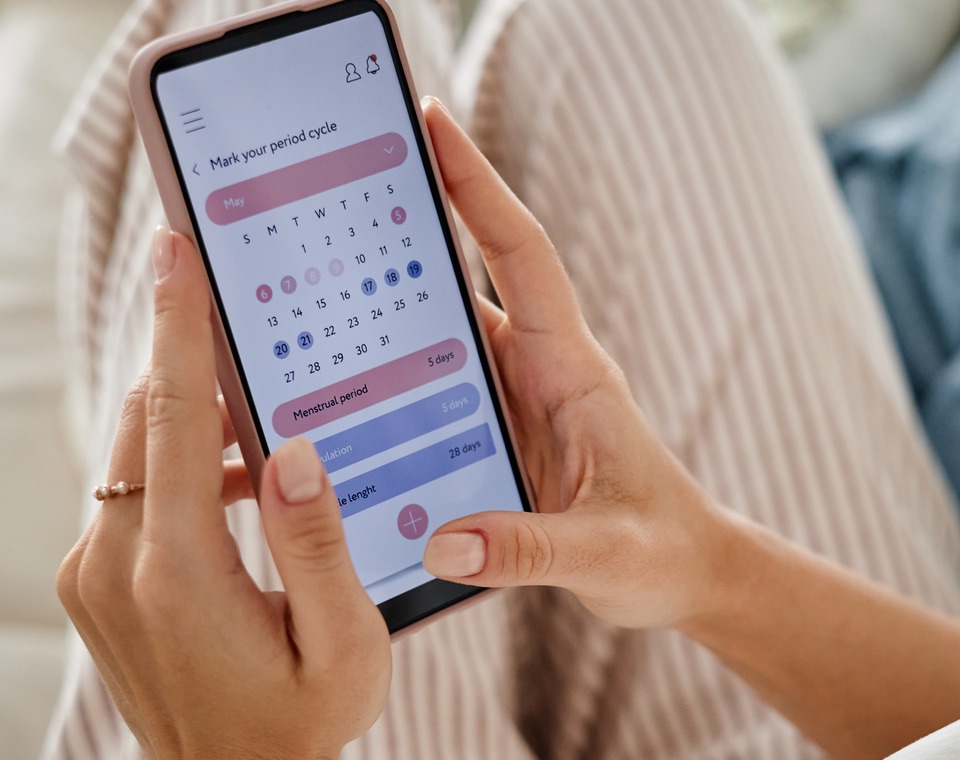
Ovulation is the shortest phase of your cycle but arguably the most talked about, largely because it's the phase most directly tied to fertility. It's also, for many women, a genuine mood and energy high point.
What's happening hormonally
Around day 14 of an average 28-day cycle (earlier or later, and often considerably later, depending on your individual cycle length), oestrogen reaches its peak, triggering a surge in luteinising hormone (LH). This LH surge is what actually causes the ovary to release an egg, typically within 24 to 36 hours of the surge starting [1][2]. It's a brief hormonal spike rather than a sustained state, which is part of why ovulation symptoms, where they're noticed at all, tend to be short-lived.
What that means for symptoms
- Mood and confidence. The oestrogen and LH peak is commonly linked to a short-lived lift in mood, confidence and sociability.
- Libido. Many women notice a genuine increase in libido around ovulation, consistent with the biological purpose of this window.
- Cervical mucus. Clear, stretchy, "egg white" cervical mucus is one of the more reliable physical signs that ovulation is approaching.
- Mild physical symptoms. Some women notice a one-sided pelvic twinge (sometimes called mittelschmerz) around the time of release. It's usually mild and brief; persistent or severe pelvic pain is worth discussing with your GP rather than assuming it's ovulation.
Confirming ovulation actually happened
Feeling like you're ovulating and confirming it are two different things, and this matters most if you're trying to conceive or trying to understand irregular cycles. Our Ovulation Test measures progesterone at the point in your cycle where it should be rising if ovulation has occurred, which is a more direct confirmation than mucus or symptom tracking alone.
If you're planning ahead rather than trying right now, understanding your ovarian reserve is a separate but related question. Our Anti-Mullerian (AMH) Test is a marker associated with how many eggs you have remaining, useful whether you're actively trying or thinking about your options for later. It reflects egg quantity, not egg quality or the chance of an individual pregnancy [3]. For a fuller picture of fertility-relevant hormones alongside ovulation confirmation, our Women's Health & Fertility hub covers the full range, and our dedicated Fertility & Reproductive Health hub is the primary home for conception-focused testing including AMH and semen analysis.
A broader Female Hormone Test checking oestrogen, progesterone, LH, FSH and testosterone together is useful if ovulation itself seems irregular or absent, rather than just late or early [4].
This is one piece of a five-part guide to symptoms across your whole cycle. See the full cycle phases and symptoms guide for the overview, or read about the follicular phase that leads into ovulation, or the luteal phase that follows it.
This article is general information, not personal medical advice. It does not diagnose any condition. Always discuss your symptoms and results with a qualified healthcare professional.