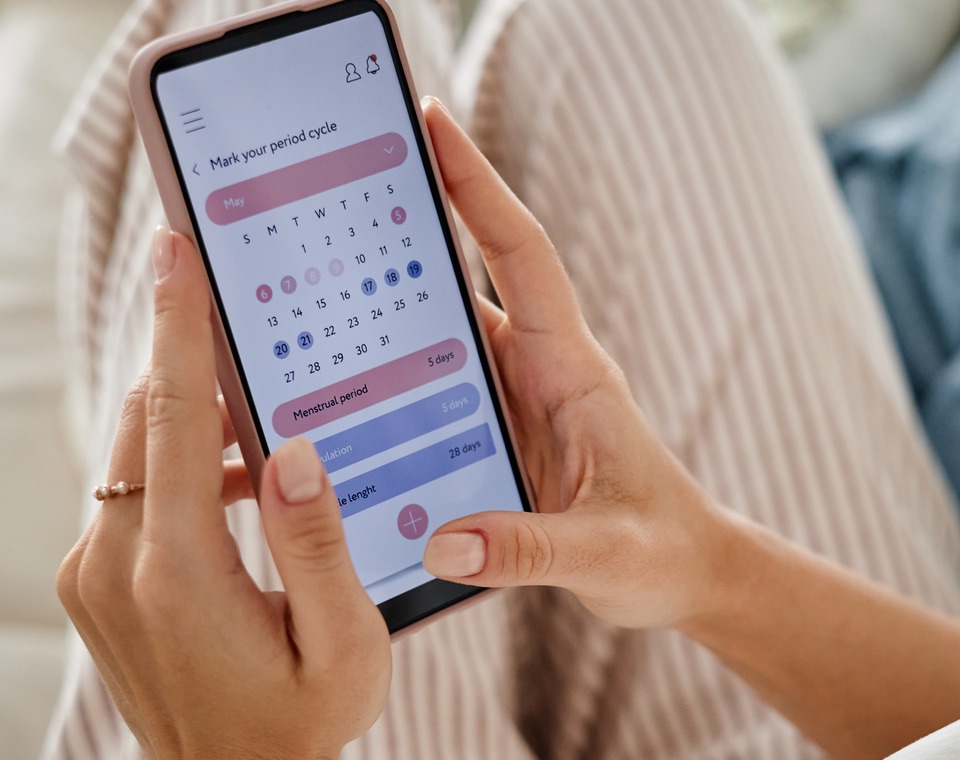
The menstrual phase, your period, is where oestrogen and progesterone both sit at their lowest point of the month. It's a natural low point hormonally, but "your period is uncomfortable" and "your period is disrupting your life" are two different things, and it's worth knowing where the line usually sits.
What's happening hormonally
Day one of your period marks the start of both the menstrual phase and the follicular phase, they overlap. The drop in progesterone and oestrogen at the end of the previous cycle triggers the shedding of the uterine lining (your period), while at the same time FSH is starting to rise again to kick off follicle development for the next cycle. The menstrual phase itself typically lasts three to seven days.
What that means for symptoms
- Cramping. Prostaglandins, hormone-like compounds that cause the uterus to contract, are the main driver of period cramps. Mild to moderate cramping is common; pain severe enough to interfere with daily activities is not something to just push through.
- Fatigue and low mood. With both major hormones at their lowest point, low energy and low mood are common in the first few days of your period.
- Headaches. Hormone-drop headaches are a recognised pattern for some women, linked to the same oestrogen fall that triggers menstruation.
- Blood loss and iron. This is the symptom category most worth paying attention to. Heavy or prolonged periods can meaningfully deplete iron stores over time, and that depletion often shows up as fatigue that persists well beyond your period, rather than lifting once your period ends.
When it's more than "just your period"
A few patterns are worth checking rather than assuming they're normal:
- Heavy or prolonged bleeding. If you're regularly soaking through protection faster than expected, or periods are lasting longer than seven days, iron depletion is a reasonable thing to check. In high-income countries, an estimated 38% of women of reproductive age have iron deficiency without anaemia and around 13% have iron-deficiency anaemia, and heavy menstrual bleeding is a leading cause [1][2]. Our Iron Studies Test is a simple first step.
- Persistent fatigue that doesn't lift. If tiredness carries on well past your period rather than easing with the rest of your cycle, it's worth checking B12 and folate alongside iron, and ruling out thyroid involvement with a Thyroid Function Test [3].
- Severe pain. Cramping that doesn't respond to standard pain relief, or that's getting worse over time, is a conversation to have with your GP rather than a testing question, it's outside what a blood test alone can assess.
If you want a broader baseline rather than a single marker, our Well Woman Test covers hormones, iron, thyroid and vitamin D together, useful for exactly this kind of pattern-spotting rather than looking at any one marker in isolation.
This is the final piece of a five-part guide to symptoms across your whole cycle. See the full cycle phases and symptoms guide for the overview, or go back to where the story started: the follicular phase that begins as your period ends. For the full range of women's hormone and nutrient testing, visit our Women's Health & Fertility hub.
This article is general information, not personal medical advice. It does not diagnose any condition. Always discuss your symptoms and results with a qualified healthcare professional.