

Pharmacogenomics Test
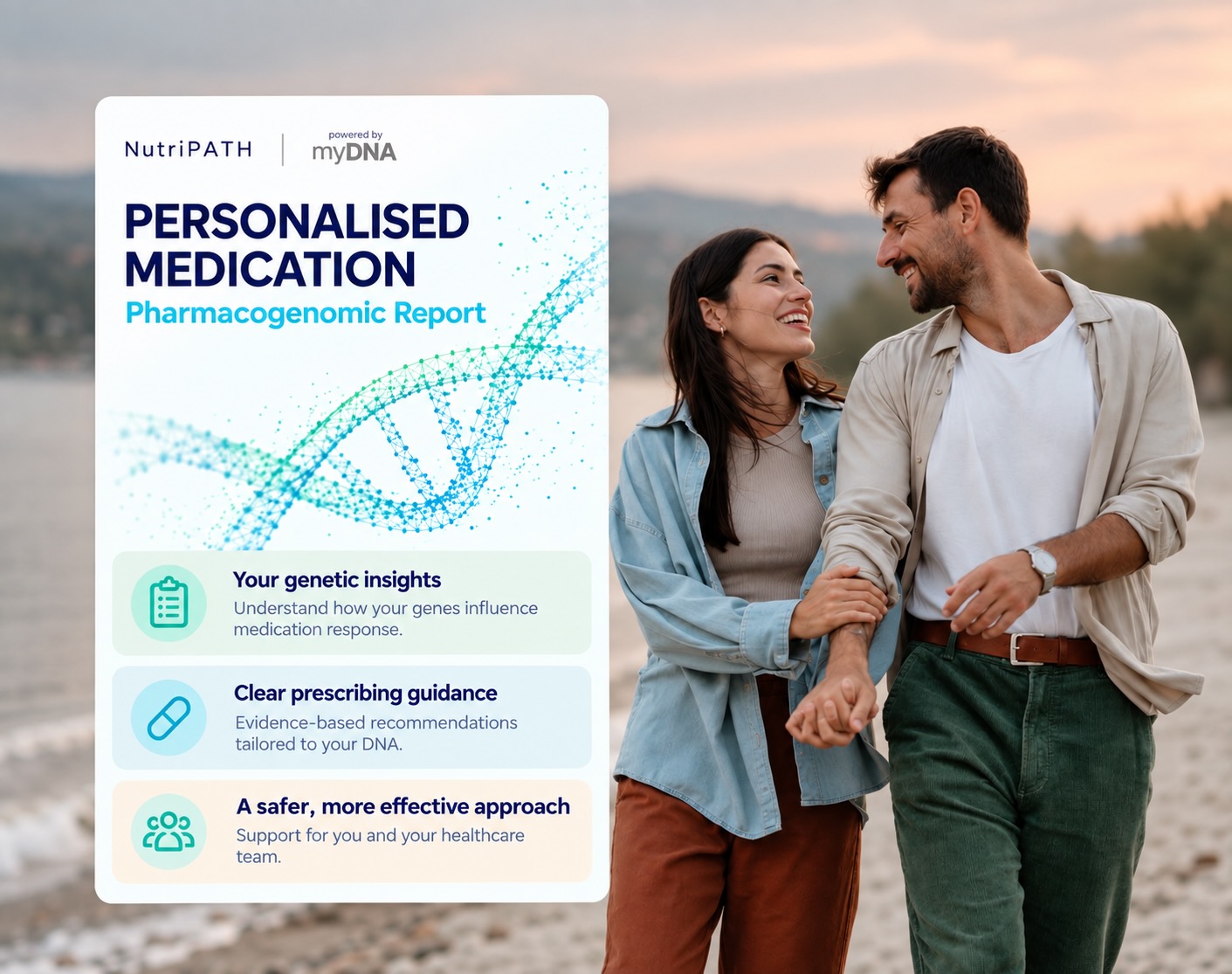
Two people given the same dose of the same drug can end up with very different amounts of it in their bloodstream, because the liver enzymes that break medications down vary genetically. Someone who clears a drug unusually fast may get little benefit at a standard dose; someone who clears it slowly may get side effects at a dose that suits everyone else. That's a large part of why finding the right medication and dose is often trial and error.
This test analyses nine genes — CYP1A2, CYP2C19, CYP2C9, CYP2D6, CYP3A4, CYP3A5, OPRM1, SLCO1B1 and VKORC1 — and reports each as a predicted metaboliser type. It then applies that to over 100 medications across around 30 classes: antidepressants including SSRIs, SNRIs and tricyclics, antipsychotics, opioid analgesics, statins, proton pump inhibitors, blood thinners including warfarin and clopidogrel, beta blockers, NSAIDs, ADHD medications and others.

What your results look like
Your report sorts every medication into one of three categories. Usual prescribing considerations means your genetics aren't expected to affect that drug, and it's prescribed normally. Minor means an altered response is possible but the evidence is limited or the effect small, so monitoring is the recommendation rather than a dose change. Major means a significant effect is predicted, and there is published guidance to consider a different dose, closer monitoring, or an alternative drug. A small number carry a flag recommending an alternative outright — for example, someone who forms very little of clopidogrel's active metabolite gets reduced antiplatelet protection, which is the kind of finding that changes a cardiologist's choice.
Alongside that you get your genotype and predicted phenotype for each of the nine genes, the reasoning behind every recommendation, and the guideline it comes from. Two things to be clear about. This report is prescribing information for your doctor, not instructions for you — never stop, start or change a dose of anything based on it. And a "major" flag doesn't mean a medication is off-limits: if a drug is already working well and you're tolerating it, that usually outweighs what the genotype predicts. Genetics is one input among several, and drug interactions, kidney and liver function, age and other medications all still apply.
What's included
Nine genes are analysed, and between them they determine how you process the large majority of medications in common use — each one is listed below with the drug groups it affects.
Test instructions

Your cheek swab test kit and all instructions are posted directly to you.

Results for this test available in 10-12 days and will be published in your online dashboard.
Ready. Set. Go!
Buy now for $299

Common Questions
You may also be interested in
Vitamin B12 Test
Test vitamin B12 levels - essential for nerve function, red blood cells and energy production.
Homocysteine Blood Test
Measure homocysteine levels — a biomarker commonly included in cardiovascular and wellness assessments.
Histamine Test
Measure whole blood histamine levels — a marker relevant to methylation status.