

Advanced Microbiome GutIQ
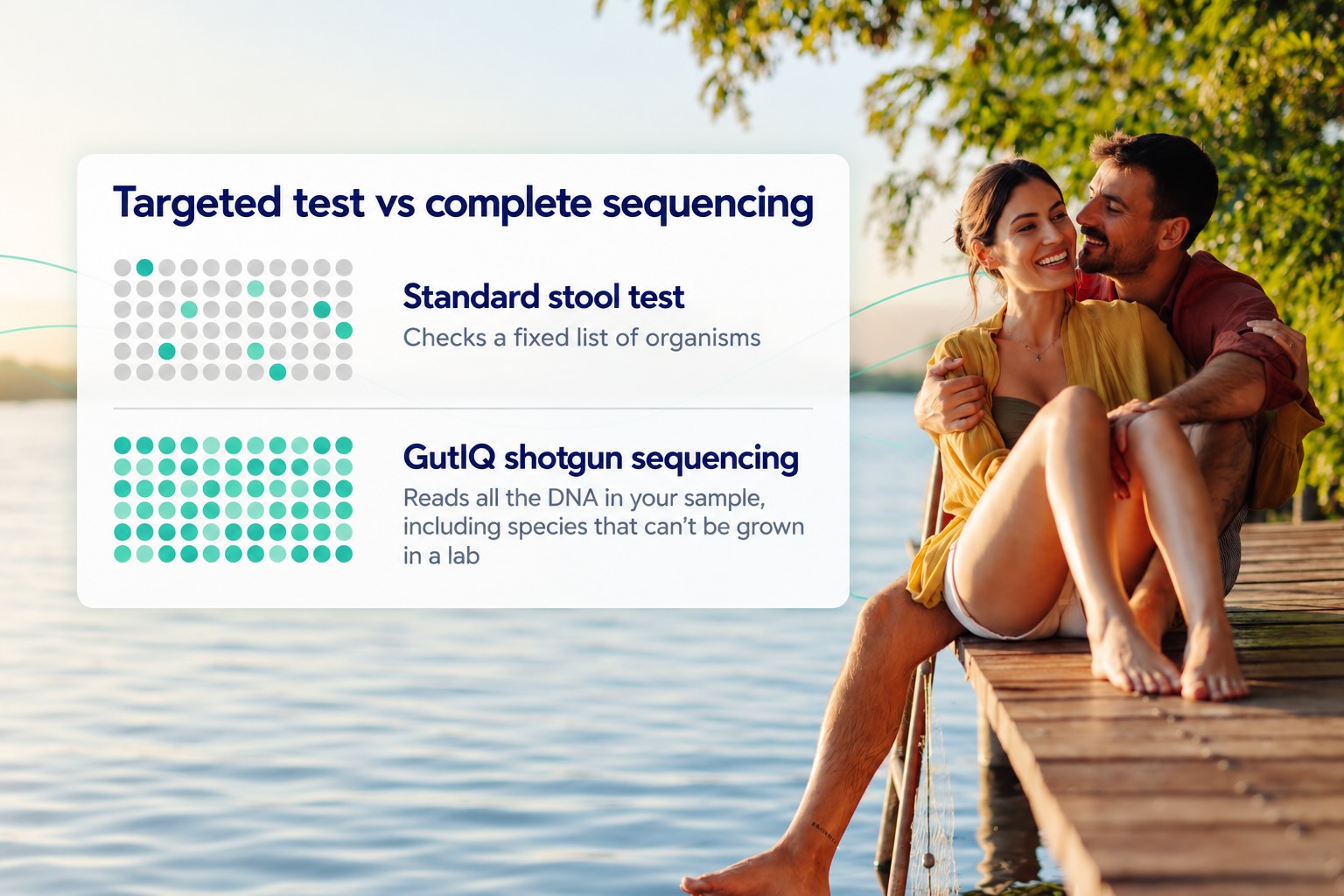
What is an advanced microbiome test?
Most stool tests look for a defined list of organisms and report whether each one is present. An advanced microbiome test sequences all the genetic material in the sample at once, so it isn't limited to what it was designed to find — it identifies species across the whole community, including organisms that can't be grown in a laboratory and wouldn't appear on a standard panel.
That matters in both directions. It picks up organisms a targeted panel would miss entirely, and because it reads genes rather than just names, it can report on what your microbiome is equipped to produce — not only who is living there.
GutIQ pairs that community read with the biochemical markers of digestive function, so a single sample covers both the ecosystem and how well your gut is working.
A microbiome test describes your gut community. It is not a diagnosis, and results are most useful read alongside your symptoms, history and a practitioner's input.

What your results look like
Your results arrive in the i-screen dashboard as an interactive report, not a static PDF.
Species Explorer - every organism identified in your sample, colour-coded and filterable — searchable by name, groupable by type, and set against how your community distributes across the major bacterial phyla. You can navigate what was found rather than scrolling a list.
Diversity, scored - Shannon and Simpson indices and your Firmicutes-to-Bacteroidetes ratio, shown against reference ranges, so "diverse" becomes a number you can retest against later.
Functional markers in context - Calprotectin, pancreatic elastase, secretory IgA, zonulin, beta-glucuronidase, steatocrit and faecal pH, each with its reference range — the digestive-function picture alongside the organism list.
Gut Health Copilot - your results organised across seven domains — digestive function, immune and inflammatory health, metabolic health, the gut–brain axis, detoxification and hormone balance, early warnings, and nutrition and lifestyle alignment — so you can see which systems the data speaks to.
What's included
Your gut is at the centre of your overall health, influencing everything from digestion and energy to mood, hormones, and immunity. This personalised gut health profile brings your results to life, showing how well each system is working and where targeted support may help. Explore your key domains below to understand your unique microbiome balance and the simple steps you can take to improve your gut health.
Gut functional markers assess how well the gut is performing its key roles in digestion, absorption, and immune defence. They measure important indicators such as enzyme activity, inflammation levels, gut barrier function, and detoxification capacity. Together, these markers provide a clearer picture of overall digestive system health.
Short-chain fatty acids are what your gut bacteria make when they ferment dietary fibre. Butyrate is the one to watch — it's the primary fuel source for the cells lining your colon, and low levels are a common finding when the community is depleted. This stool test reports all four: butyrate, acetate, propionate and valerate. Most panels report three or none.
Diversity is measured two ways here. The Shannon and Simpson indices score how many different species are present and how evenly they're distributed — a community dominated by a few organisms scores lower than a balanced one, even with the same species count. Alongside those sits your Firmicutes-to-Bacteroidetes ratio and your distribution across the six major phyla. These are the numbers worth recording, because they're what a retest in six months compares against.
Research has identified microbiome patterns that appear more often in people with certain gut-related conditions. This section shows how your community compares against those published patterns. This is a research comparison — not a genetic test, a risk score or a diagnosis. A pattern resembling one described in the literature doesn't mean you have or will develop that condition. It's context for a conversation with a practitioner.
Because sequencing reads genes rather than only identifying organisms, GutIQ can report what your microbiome is equipped to do — its capacity to produce compounds such as lipopolysaccharides, histamine, trimethylamine, branched-chain amino acids and indolepropionic acid, and how it handles carbohydrate, lipid and protein metabolism. This is the layer neither culture-based nor targeted-PCR testing can reach.
Pathogenic bacteria are harmful microbes that can cause acute infections, inflammation, and disrupt the gut microbiome. Detecting these bacteria early helps prevent serious illness and supports faster recovery. Managing pathogenic infections is essential for maintaining a healthy and resilient digestive system.
Yeast and fungi naturally exist in small amounts within the gut but can cause health problems if they grow unchecked. Overgrowth may lead to digestive discomfort, skin issues, fatigue, and weakened immunity. Assessing fungal balance helps identify hidden drivers of gut symptoms and supports targeted recovery.
This panel detects H. pylori by both antigen testing and quantitative PCR, so you get a measured level rather than a yes/no. It identifies eight virulence factors indicating how aggressive a strain is, and checks mutations associated with antibiotic resistance.
Parasites can be present without obvious symptoms and can affect digestion, nutrient absorption and the gut lining. This panel screens for seven of the most common. If one is found, take the result to your doctor — some require medical management, and some are notifiable.
Blastocystis is found in around a third of healthy adults, so a positive result alone tells you very little. Subtyping identifies which strain you're carrying - some are linked to bloating, altered bowel habits and depletion of beneficial bacteria, while others appear harmless - so you can act on the ones that matter and leave the rest alone.
Intestinal worms can cause a range of digestive and immune issues, particularly if left undetected. Identifying and addressing worm infections helps restore proper nutrient absorption and gut balance. Screening for worms is an important step in protecting overall digestive health.
Certain viruses can infect the gastrointestinal tract and contribute to inflammation, digestive symptoms, and immune system strain. Identifying viral infections supports a clearer understanding of gut health and helps guide appropriate immune support strategies. Early detection can help minimise long-term effects on gut function.
A healthy gut microbiome is rich in beneficial bacteria that aid digestion, produce important nutrients, and support immune function. Measuring the levels and balance of these bacteria helps assess the resilience and health of the gut ecosystem. Strong levels of beneficial flora are linked to better digestion, mood balance, and disease prevention.
Opportunistic bacteria are strains that are normally harmless in small amounts but can cause problems if they overgrow. Elevated levels may contribute to digestive symptoms, inflammation, or disruptions in the gut microbiome balance. Monitoring these bacteria helps protect gut health and prevent chronic issues.
Test instructions

Your test kit and all instructions are posted directly to you, and there is no need to visit a collection centre.

Mail your sample(s) back to the lab using the prepaid envelope and packaging provided.

Results for this test typically available in 2 weeks and will be published in your online dashboard.
Some infections in this panel are notifiable conditions - positive results will be reported to the relevant public health authority by the laboratory as required by law, and you may be contacted by a public health unit for follow-up.
Ready. Set. Go!
Buy now for $599

Common Questions
You may also be interested in
SIBO Breath Test - Glucose + Lactulose
Breath test measuring hydrogen and methane over three hours, using both glucose and lactulose substrates. Markers relevant to bacterial overgrowth in the small intestine.
Leaky Gut Test
Measure markers associated with intestinal permeability — relevant to gut barrier health.
Food Intolerance Test (IgG) - 96 Foods
A food intolerance occurs when someone has difficulty digesting a particular food - this can lead to symptoms such as intestinal gas, abdominal pain or diarrhoea. This Food Intolerance Test includes an IgG screen for 96 common foods.