

Biological Age Analysis
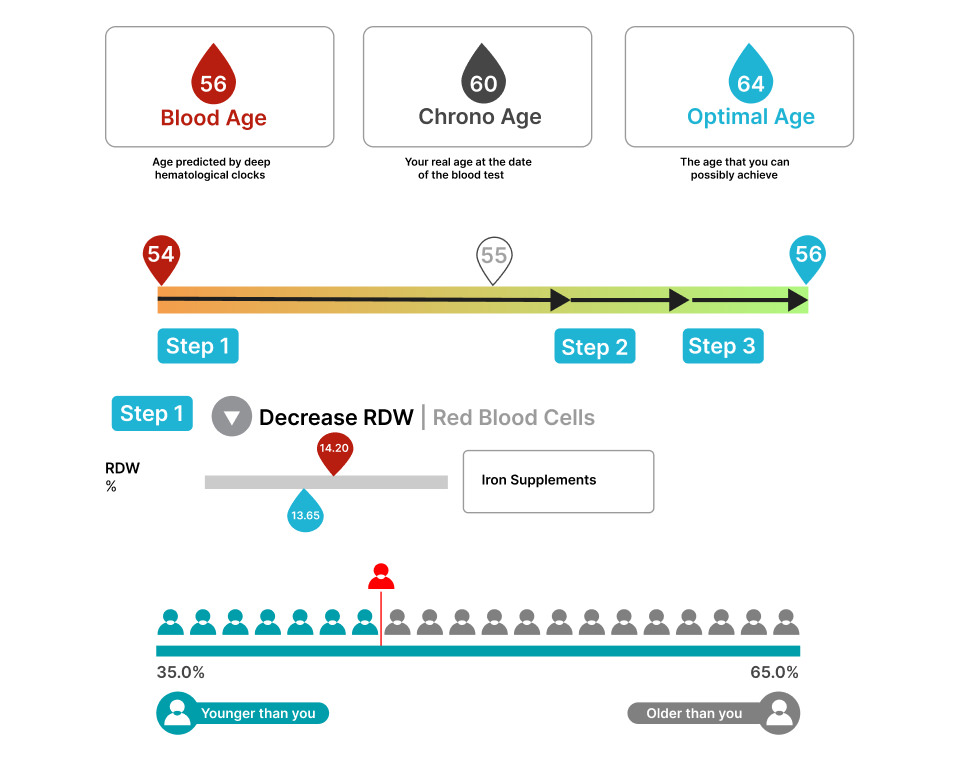
Blood Age - your blood has a story to tell
The Blood Age Clock is an innovative tool designed to comprehend and monitor the ageing process at a cellular level. By utilising a straightforward blood test, this clock accurately gauges biological age and furnishes a detailed assessment of blood health and overall ageing condition. Unlike traditional methods, the Blood Age Clock delves into your body's internal state to offer a more precise reflection of your actual age.
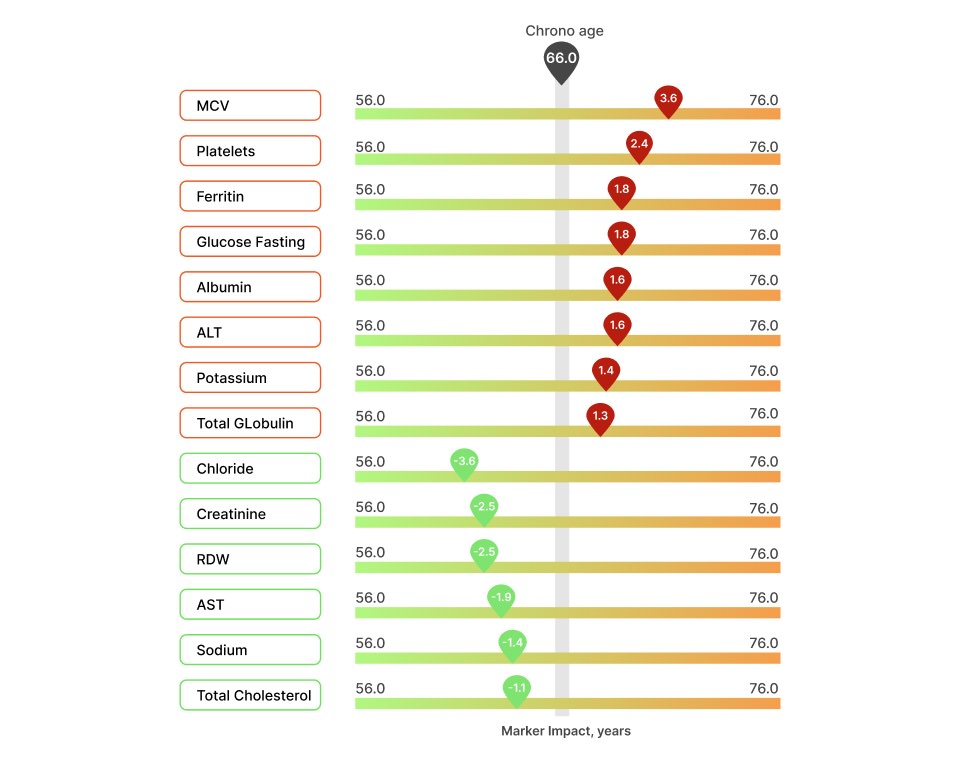
Benefits of Blood Age Clock
- Understanding Ageing Status: Gain insights into your current ageing status and identify potential health risks.
- Tracking Changes: Monitor fluctuations in your blood age over time and assess the impact of interventions.
- Informed Decision-Making: Make informed choices regarding your health and well-being based on data-driven insights.
The information derived from this analysis can aid in making lifestyle and healthcare decisions that promote healthier ageing and longevity. By leveraging the Blood Age Clock, individuals can proactively address health concerns and optimise their wellness based on personalised data.
You should consider undergoing this analysis if you aspire to lead a healthier, longer life, possess a family history of diseases or disease susceptibility, are intrigued by biohacking, seek to implement proactive health changes, wish to pinpoint internal organs or systems requiring attention, or desire deeper insights into your health status post an illness or injury event. By embracing this analysis, individuals can gain valuable knowledge about their biological age, understand the impact of lifestyle choices on their body, and receive tailored recommendations to enhance overall wellness and healthspan. *Note this blood test does not include the BloodAge analysis which can be requested separately from your healthcare practitioner.
www.ageingclocks.com
What's included
The full blood count measures red cells, white cells and platelets — foundational markers included in most health assessments. It is actually a group of tests that examine different parts of the blood. Results from the following tests provide the broadest picture of your health.
Lipids and cholesterol are fat-like substances in your blood. Some are necessary for good health, but when you have a high level of cholesterol in your blood, a lot of it ends up being deposited in the walls of your arteries and other vital organs. Lifestyle choices including diet, exercise and alcohol intake can all influence cholesterol levels and your risk of developing heart disease.
The apo B/apo A1 ratio indicates the cholesterol balance between potentially atherogenic (bad) and anti-atherogenic (good) particles.
The HbA1c diabetes test measures the average amount of sugar attached to your red blood cells for the past several months. Unlike a regular blood sugar test, the HbA1c blood test is not affected by short-term changes.
The link between low-grade inflammation and chronic disease is widely recognised. Research indicates that following an anti-inflammatory diet may help fight off inflammation.
Your kidneys filter waste from your body and regulate salts in your blood. They also produce hormones and vitamins that direct cell activities in many organs and help to control blood pressure. Your kidneys filter waste and regulate salts in your blood. This panel measures key markers of kidney function.
Your liver processes drugs and alcohol, filters toxic chemicals, stores vitamins and minerals, and makes bile, proteins and enzymes. This liver function test measures key liver enzymes and markers relevant to understanding your liver health.
This simple iron test measures how much iron you have in your blood, as well as the amount of iron you have stored in your body. Iron levels are relevant to energy, blood cell health and overall wellbeing.
Alpha-fetoprotein is a marker that may be produced by certain tumours.
IGF-1 is involved in a wide range of physiological processes, including bone growth, muscle growth and repair, and the development of the nervous system. It also helps regulate metabolism, including glucose metabolism and fat metabolism.
C-peptide is a substance made in the pancreas, along with insulin.
Test instructions

The best time to do this test is first thing in the morning.

Fast from all food and drink (other than water) for at least 8 hours, and no more than 12 hours prior to your test.

Download and print your pathology form from your i-screen dashboard.

Take your form to one of our affiliated collection centres to have your sample taken.
Ready. Set. Go!
Buy now for $349

You may also be interested in
Essential Fitness Check
If you're embarking on a new fitness program, understanding key biomarkers in your blood with an Essential Fitness test can help make sure you're in good shape before you start.
Lifestyle Test
Measure cholesterol, liver, kidney and blood sugar markers — a simple baseline for understanding your core health.
Iron Studies Test
Check your iron, ferritin and transferrin levels. Iron deficiency is Australia’s most common nutritional problem.