
.jpg?q=70)
Vitality - Elite Comprehensive
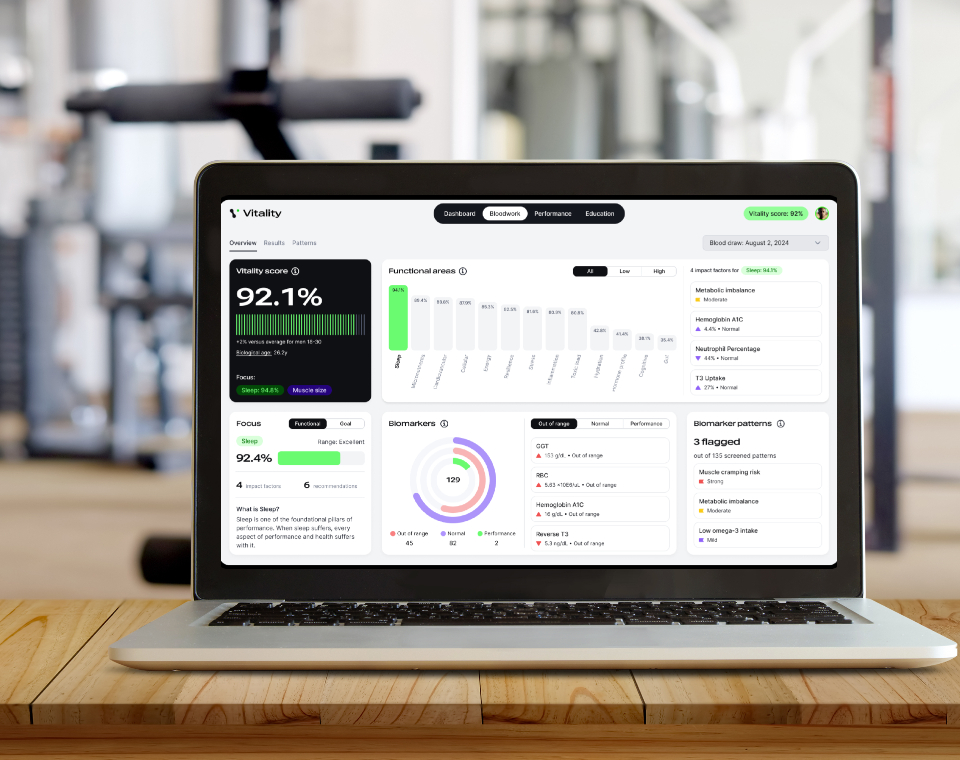
This panel is compatible with the Vitality bloodwork platform which offers personalised bloodwork interpretation and health recommendations to optimise health and performance. i-screen results can be uploaded directly to Vitality for a comprehensive analysis of your physiology and corresponding health roadmap covering lifestyle, nutrition, and supplement recommendations. Learn more and purchase a Vitality Upload plan to use with your i-screen results at vitalityblueprint.com.
What's included
This hormone analysis includes an oestrogen and testosterone, as well as the regulatory hormones LH and FSH test. These sex hormones (in conjunction with adrenal and thyroid hormones) exert powerful effects on the body. Knowing the function and levels of these hormones is a positive step in creating hormone balance and achieving wellbeing.
For individuals taking an aromatase inhibitor such as arimidex, oestradiol results may be falsely elevated - this is because the standard ELISA assay also picks up metabolites of oestradiol. The LCMS technique avoids this issue.
IGF-1 is involved in a wide range of physiological processes, including bone growth, muscle growth and repair, and the development of the nervous system. It also helps regulate metabolism, including glucose metabolism and fat metabolism.
Cortisol and DHEA-S play important roles in regulating physiological processes in the body. Cortisol has a catabolic effect which mobilises the body’s nutritional resources for fuel. DHEA-S has an opposing anabolic effect and converts food into living tissue. In order to achieve your fitness goals cortisol and DHEA-S must be in proper balance.
Your thyroid gland produces hormones that regulate growth and energy expenditure. Thyroid disorders are quite common, and many people don’t have any symptoms at all. This thyroid test screens for the thyroid hormones that play a key role in regulating the body’s metabolism.
The full blood count measures red cells, white cells and platelets — foundational markers included in most health assessments. It is actually a group of tests that examine different parts of the blood. Results from the following tests provide the broadest picture of your health.
Lipids and cholesterol are fat-like substances in your blood. Some are necessary for good health, but when you have a high level of cholesterol in your blood, a lot of it ends up being deposited in the walls of your arteries and other vital organs. Lifestyle choices including diet, exercise and alcohol intake can all influence cholesterol levels and your risk of developing heart disease.
ApoA1 and ApoB give a detailed view of cholesterol balance — ApoA1 reflects protective HDL particles, while ApoB represents atherogenic LDL particles that promote plaque build-up. The ApoB/ApoA1 ratio is a strong predictor of cardiovascular risk, offering more precision than standard cholesterol tests. Lipoprotein(a), or Lp(a), is a genetic marker that can elevate heart disease risk even when other lipid levels are normal. Measuring both provides early insight into hidden or inherited cardiovascular risks, guiding targeted prevention.
Insulin resistance can lead to difficulty losing weight, distinct abdominal fat, fatigue, bloating and sugar cravings. Identifying insulin resistance early and committing to lifestyle changes can ultimately help the progression to diabetes.
The link between low-grade inflammation and chronic disease is widely recognised. Research indicates that following an anti-inflammatory diet may help fight off inflammation.
While fibrinogen levels are elevated, they may increase the risk of developing a blood clot and over time this can contribute to an increased risk for developing cardiovascular disease.
C-peptide is a substance made in the pancreas, along with insulin.
Leptin is often called a 'hunger hormone' because it regulates appetite by signalling to the brain that you have eaten enough food. This test measures the level of leptin in your blood.
Homocysteine is an amino acid that’s regulated by the body’s methylation process, which supports detoxification, energy production, and nervous system health. If methylation is not functioning efficiently, homocysteine can build up, which may raise the risk of heart and and neurological issues.
Calcium and vitamin D play a critical role in maintaining bone health. When you don’t get enough calcium, you increase your risk of developing osteoporosis and stress fractures. This blood test measures both your total calcium and corrected calcium levels, as well your 25-OHD vitamin D levels.
This simple iron test measures how much iron you have in your blood, as well as the amount of iron you have stored in your body. Iron levels are relevant to energy, blood cell health and overall wellbeing.
This blood test helps identify nutritional deficiencies or absorption issues that may contribute to anaemia, fatigue or cognitive changes.
Your liver processes drugs and alcohol, filters toxic chemicals, stores vitamins and minerals, and makes bile, proteins and enzymes. This liver function test measures key liver enzymes and markers relevant to understanding your liver health.
Your kidneys filter waste from your body and regulate salts in your blood. They also produce hormones and vitamins that direct cell activities in many organs and help to control blood pressure. This panel measures key markers of kidney function.
Red blood cell testing provides a measurement equivocal to intracellular levels, and is therefore more insightful than a regular serum blood test.
A high Copper to Zinc ratio is believed to cause a range of detrimental health effects including growth and mental abnormalities, increased age degeneration and increase oxidative stress and cardiovascular disease risks.
The balance of fats in your diet directly influences inflammation, brain health, hormones, and cardiovascular function. This section measures omega-3, omega-6, monounsaturated, saturated and trans fats, along with key ratios like the AA/EPA inflammatory index. These insights reflect dietary fat quality, absorption efficiency, and the body’s overall inflammatory environment — empowering targeted nutritional interventions for long-term wellbeing.
Test instructions

Download and print your pathology form from your i-screen dashboard.

Take your form to one of our affiliated collection centres to have your sample taken.

Fast (other than water) for at least 8 hours, and no more than 12 hours prior to your blood test. Refrain from biotin supplements for 72hrs prior to collection.
Ready. Set. Go!
Buy now for $1170

You may also be interested in
Male Hormone Test
Measure testosterone, free testosterone, SHBG, LH and FSH — key markers relevant to male hormonal health.
Sports Hormone Check (male)
55 markers built around hard training — hormones, recovery, blood, and the organs carrying the load.
Male Endurance Test
Analyse 70 performance biomarkers including testosterone, cortisol, iron, cholesterol and blood count for male athletes.