
Male Endurance & Nutrition Test
Insight into your nutritional health
Poor diet can have a significant impact on your health. It can cause conditions like obesity, metabolic syndrome and common chronic systemic diseases including cardiovascular disease, diabetes and osteoporosis.
This nutrition blood test is a comprehensive and reassuring way of assessing your current state of health and identifying common conditions based on the levels of vitamins and minerals in your blood.

Our Endurance Check measures key drivers of performance including your metabolic hormone function, levels of inflammation in the body, muscle damage, oxygen carrying capacity and bone health. We also test the function of your body’s essential organs to ensure you’re building on a solid foundation.
What's included
This snapshot brings together your key results, context, and next steps to give a clear picture of your health.
Our biological age test is a scientifically validated method that uses nine key blood markers to provide personalised insights into your health and ageing. Your biological age score is your biological age compared to your chronological (actual) age.
This hormone blood test measures levels of the key hormones and androgens that play an important role in governing masculinity and fertility. If you need an LCMS sensitive oestradiol assay, you can add this test on from the personalised tests area of our website: https://www.i-screen.com.au/app/personalised-test
IGF-1 is involved in a wide range of physiological processes, including bone growth, muscle growth and repair, and the development of the nervous system. It also helps regulate metabolism, including glucose metabolism and fat metabolism.
Cortisol and DHEA-S play important roles in regulating physiological processes in the body. Cortisol has a catabolic effect which mobilises the body’s nutritional resources for fuel. DHEA-S has an opposing anabolic effect and converts food into living tissue. In order to achieve your fitness goals cortisol and DHEA-S must be in proper balance.
Your thyroid gland produces hormones that regulate growth and energy expenditure. Thyroid disorders are quite common, and many people don’t have any symptoms at all. This thyroid test screens for the thyroid hormones that play a key role in regulating the body’s metabolism.
The full blood count measures red cells, white cells and platelets — foundational markers included in most health assessments. It is actually a group of tests that examine different parts of the blood. Results from the following tests provide the broadest picture of your health.
Insulin resistance can lead to difficulty losing weight, distinct abdominal fat, fatigue, bloating and sugar cravings. Identifying insulin resistance early and committing to lifestyle changes can ultimately help the progression to diabetes.
Calcium and vitamin D are central to bone health. This panel measures total and corrected calcium, vitamin D, phosphate, magnesium and urate.
Lipids and cholesterol are fat-like substances in your blood. Some are necessary for good health, but when you have a high level of cholesterol in your blood, a lot of it ends up being deposited in the walls of your arteries and other vital organs. Lifestyle choices including diet, exercise and alcohol intake can all influence cholesterol levels and your risk of developing heart disease.
Your liver processes drugs and alcohol, filters toxic chemicals, stores vitamins and minerals, and makes bile, proteins and enzymes. This liver function test measures key liver enzymes and markers relevant to understanding your liver health.
Your kidneys filter waste from your body and regulate salts in your blood. They also produce hormones and vitamins that direct cell activities in many organs and help to control blood pressure. This panel measures key markers of kidney function.
Proteins, fats, and carbohydrates are broken down by stomach acids, enzymes produced by the pancreas, and bile from the liver. This process also releases micronutrients. This blood test measures the levels of enzymes produced by the pancreas.
The link between low-grade inflammation and chronic disease is widely recognised. Research indicates that following an anti-inflammatory diet may help fight off inflammation.
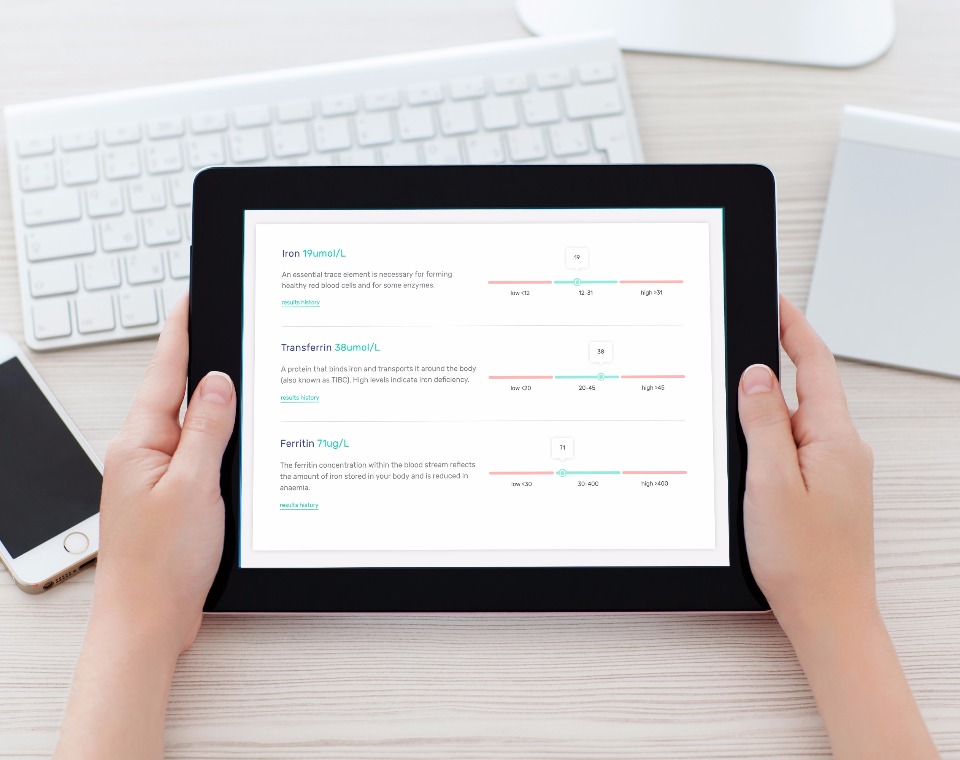
This simple iron test measures how much iron you have in your blood, as well as the amount of iron you have stored in your body. Iron levels are relevant to energy, blood cell health and overall wellbeing.
Like vitamins, minerals are substances found in food that your body needs for growth and health. There are two kinds of minerals - macrominerals and trace minerals. Your body needs just small amounts of trace minerals which include iron, copper, zinc and selenium.
The fat soluble vitamins are soluble in lipids. These vitamins are usually absorbed in fat globules that travel through the lymphatic system of the small intestines and into the general blood circulation within the body. These fat soluble vitamins are then stored in body tissues.
Water-soluble vitamins are not stored in the body. The body absorbs what it needs and then usually excretes the excess in your urine. The body needs a continuous supply through a steady daily intake. B vitamins are a class of water-soluble vitamins which play important roles in cell metabolism, converting food into fuel and metabolising fats and proteins. They are important for the nervous system and brain function as well as a healthy liver, hair, skin and eyes, and they also strengthen the immune system.
Homocysteine is an amino acid that’s regulated by the body’s methylation process, which supports detoxification, energy production, and nervous system health. If methylation is not functioning efficiently, homocysteine can build up, which may raise the risk of heart and and neurological issues.
Test instructions

Fast from all food and drink (other than water) for at least 8 hours, and no more than 12 hours prior to your test.

Consider ceasing nutritional supplements (particularly biotin) for 3 days before the test.

Visit the collection centre within one hour of waking for the most accurate hormone test measurements.
Take your form to one of our affiliated collection centres to have your sample taken.
Ready. Set. Go!
Buy now for $599